--------------------------------------------------------------------------------------------------------------------------------------------------------------------------------------------------------------------------------------------------------------------------------------------------------------------------------------------------------------------------------------------------------------- |
Ten Reasons to Consider Christianity
|
Why do millions of people believe in God and place their trust in Jesus Christ? These ten thought-provoking reasons explore some of the evidence for Christianity and invite you to consider whether the Christian faith offers the most compelling explanation for life, truth and hope. |
---------------------------------------------------------------------------------------------------------------- |
Introduction:
 Did all of creation create itself? Is there a God? Do I have a soul? Is there life after death? Is there a true purpose and meaning to life? Did all of creation create itself? Is there a God? Do I have a soul? Is there life after death? Is there a true purpose and meaning to life?
These are questions everyone asks at some point. Yet today, many people don’t want to hear answers from Christians. We’re often seen as judgemental, unscientific, or hypocritical – and to be honest, sometimes Christians have contributed to that perception. And we must acknowledge there have been moments where Christians have failed to reflect the kindness and grace of Jesus and the GOOD NEWS of Salvation.
But it’s also important to recognise this: rejecting Christianity because of the behaviour of some Christians is like rejecting life-saving medicine because a doctor was rude. A bad example does not discredit the truth behind it. If Christianity is worth anything, it’s worth examining on its own message, not just on the mistakes of its followers.
Many also believe science has made God unnecessary. Yet science keeps revealing astonishing complexity – from the fine-tuning of the universe to the information-packed code of DNA. The deeper we look, the less random everything seems. That’s why many thoughtful people, including scientists, consider that an intelligent Creator makes more sense than blind chance. Christianity doesn’t ask us to switch our brain off – it invites us to search, question, and think.
So why consider Christianity at all? Because it offers answers to the things we value most: meaning, purpose, identity, forgiveness, and hope. It speaks to both the mind and the heart. And beyond personal belief, Christianity has shaped our world for the better. Hospitals, universities, human rights, charity work, and the idea that every person has worth all grew from Christian foundations. When lived sincerely, Christianity encourages compassion, justice, generosity, and community. It brings healing—not just to individuals, but to society as a whole.
10 Reasons to consider Christianity are simple illustrations to give Biblical answers to life’s big questions. We hope they get you thinking and start you on an incredible journey.
Reason 1: We have nothing to lose.
Reason 2: Creation points to a Creator.
Reason 3: No one truly knows how it all began.
Reason 4: Life is more than just the physical.
Reason 5: Our moral compass points to God.
Reason 6: Christianity has been misrepresented.
Reason 7: We need to re-connect with God.
Reason 8: Jesus’ claims need to be considered.
Reason 9: Our salvation is a free gift.
Reason 10: To go to Heaven when we die.
------------------------------------------------------------------------------------------------ |
Reason 1: We have nothing to lose.
 Gambling is taking a chance – risking something on an uncertain outcome. You can bet small or bet big, but would you stake your entire life on a roll of the dice? Most of us wouldn’t. Gambling is taking a chance – risking something on an uncertain outcome. You can bet small or bet big, but would you stake your entire life on a roll of the dice? Most of us wouldn’t.
And yet, when it comes to God, that’s exactly the kind of wager many people are making.
To live as if there is no God is to bet everything on the idea that, when you die, that’s it – nothing more – you will simply cease to exist. No continuation. No accountability. No meaning beyond the here and now. But what if that assumption is wrong?
What if death isn’t the exit door to your existence?
What if you have a soul that continues into eternity?
What if there is a meaning to life?
The truth is, no one can physically prove that God exists – but equally, no one can prove that He doesn’t. Even many objective scientists acknowledge how few answers we have about the origin of existence. The more we learn about the fine-tuning of the universe, the origins of life, and human consciousness, the more questions arise. In the end, people often reject God and place their trust in unproven theories that rely on incomplete or debated evidence, simply because they seem more probable – a gamble.
So where are you placing your trust? Are you certain enough to bet everything on the belief there is no God; that life is simply a miraculous cosmic accident and there will be ‘nothing’ when you die? Blaise Pascal, a mathematician and thinker, argued along these lines: it’s wiser to live as though God exists and find out you were wrong, than to live as though He doesn’t and discover you were mistaken.
The Bible teaches we are more than just physical beings; we are created with a soul and given free will. It also says humanity has turned away from God – what it calls sin – creating a real separation. Yet God didn’t leave it there. In love, He stepped into history in the person of Jesus Christ, who took the penalty for that separation upon Himself. He paid the complete penalty of sin on the cross.
“God demonstrates His own love for us in this: while we were still sinners, Christ died for us” (Romans 5:8). The invitation is simple: “Believe in the Lord Jesus, and you will be saved” (Acts 16:31).
So here’s the question: what are you betting your eternal-life on? Because believing there is ‘nothing’ is the ultimate gamble… while trusting in Christ offers everything to gain – and nothing to lose.
Back to Top ------------------------------------------------------------------------------------------------ |
Reason 2: Creation points to a Creator.
 A book needs an author. A program needs a programmer. A poem needs a poet. A design needs a designer. An invention needs an inventor. So it’s only natural to ask – doesn’t creation point to a Creator? A book needs an author. A program needs a programmer. A poem needs a poet. A design needs a designer. An invention needs an inventor. So it’s only natural to ask – doesn’t creation point to a Creator?
When you look at a painting, you don’t assume it painted itself. It’s obvious there’s an artist behind it. In the same way, when we look at the natural world, we see order, purpose, and astonishing complexity.
Take animals, for example. They’re wired for survival – what zoologists call instinct. But where did that “programming” come from? Or consider the laws of science: they’re consistent, measurable, and dependable. But laws don’t enforce themselves – they require a lawgiver. If the universe operates according to precise, orderly rules, it’s reasonable to ask who established and sustains them.
We also observe design throughout creation. From the vastness of space to the intricacy of DNA – the most efficient information storage system we know – everything bears the marks of intentional design. It stretches belief to say that such complexity organised itself without guidance.
Some point to evolution as the answer – suggesting that, given enough time, everything formed itself, ultimately from nothing. But even if we allow for evolutionary processes, they still don’t explain the origin of life, the source of information, or why the universe is so finely tuned for existence in the first place.
In the end, we’re faced with a choice: either everything came from nothing, for no reason, or there is a powerful, intelligent Creator behind it all.
Interestingly, as science continues to uncover the fine-tuning and complexity of the universe, many well-respected scientists and academics are beginning to question long-held assumptions about our origins. More and more, their conclusions echo the words of Psalm 19:1: The heavens declare the glory of God; and the firmament shows His Handiwork.
Back to Top ------------------------------------------------------------------------------------------------
|
Reason 3: No one truly knows how it all began.
 Some people refuse to believe in God and instead place their faith in scientific theories. They argue that rational people should reject the Bible's fanciful account of creation and accept explanations such as evolution and the Big Bang. Yet neither theory escapes the fundamental question of origins: Where did everything come from? Some people refuse to believe in God and instead place their faith in scientific theories. They argue that rational people should reject the Bible's fanciful account of creation and accept explanations such as evolution and the Big Bang. Yet neither theory escapes the fundamental question of origins: Where did everything come from?
Evolution seeks to explain how life developed from simpler forms over millions of years. Whether one accepts or rejects that explanation, it does not answer how the first living cell came into existence. When confronted with this question, some suggest that life originated elsewhere in the universe. But this merely shifts the problem to another location. Where did that life come from? Continue tracing the chain backwards and the same question remains: Where did the very first life originate?
The same dilemma applies to the universe itself. Either the universe has always existed, or it had a beginning. If it had a beginning, what caused it? The Big Bang theory describes the early expansion of the universe from an extremely hot, dense state, but it does not explain why matter, energy, space and time existed in the first place. Why is there something rather than nothing? Something cannot create itself, and nothing has no power to create anything.
The Bible begins with a simple yet profound declaration: "In the beginning God created the heavens and the earth." (Genesis 1:1). Rather than claiming the universe created itself, Christianity points to an eternal Creator who exists beyond space, time and matter, and is therefore not bound by them.
Every worldview must ultimately answer the question of first cause. Was the universe eternal? Did everything somehow arise without a sufficient cause? Or is there an eternal Creator behind it all? None of us witnessed the beginning, so every position involves faith. The question is not whether we have faith, but where we place it.
The remarkable order, complexity and fine-tuning of the universe are consistent with the work of an intelligent Designer. The heavens not only inspire wonder, they point us to the One who made them.
The heavens declare the glory of God; and the firmament shows His handiwork. (Psalm 19:1)
Back to Top ------------------------------------------------------------------------------------------------ |
Reason 4: Life is more
than just the physical.
 We live in a highly mechanised world. When an engine breaks down, we fix or replace the faulty part and off it goes again. When the computer crashes, we call someone in, swap out a component, and – just like that – it’s back online. We live in a highly mechanised world. When an engine breaks down, we fix or replace the faulty part and off it goes again. When the computer crashes, we call someone in, swap out a component, and – just like that – it’s back online.
Sadly, we cannot deal with the problem of a human death mechanically. When a person dies, we can’t fix or replace the broken parts, switch them on and – hey presto – like Frankenstein’s monster, they come back to life. Even with advanced life-support, when doctors declare someone dead, they’re acknowledging a sobering reality: something has left the body, and no amount of technology can bring it back.
So what is that ‘something’?
Some argue that life is simply the result of a precise balance of chemicals, electrical signals, and memory processes. But that explanation falls short. It doesn’t account for self-awareness, or that deep inner sense of identity that seems untouched by age, even as the body declines (Ecc. 3:11). If life were purely biological, then death should be solvable with the right procedure. Yet it isn’t. Unlike mechanical failure, human death is final. Scripture points to the reason: something – our spirit – departs and does not return (Eccl. 12:7).
Science does an incredible job observing the physical world, but it has its limits. It can’t put the soul on an operating table. And yet, we all know – intuitively – that we are more than flesh and bone. We carry an inner life full of hopes, fears, beliefs and longings that can’t be measured or dissected.
That raises the biggest question of all: when we die, where does the real ‘us’ go?
It’s easy to avoid that question. Life gets busy with chasing success, security, and all the rest. Most of us give little thought about the consequences of death. But Jesus cuts through the noise: “What will it profit someone to gain the whole world, yet forfeit their soul?” (Mark 8:36).
Christianity doesn’t just pose the question – it offers an answer. At the heart of it is this promise: “For God so loved the world that He gave His one and only Son, that whoever believes in Him shall not perish but have eternal life” (John 3:16).
When the lights go out, that’s not the end of the story – it’s just another beginning.
Back to Top ------------------------------------------------------------------------------------------------ |
Reason 5: Our moral compass points to God.
 Deep beneath the earth’s surface, molten metals generate a magnetic field that surrounds our planet. Though invisible, this field is real and measurable. A compass works because its needle responds to that unseen force, consistently pointing north. We trust it because we can clearly observe its effects. Deep beneath the earth’s surface, molten metals generate a magnetic field that surrounds our planet. Though invisible, this field is real and measurable. A compass works because its needle responds to that unseen force, consistently pointing north. We trust it because we can clearly observe its effects.
In much the same way, God is invisible, yet His presence is evident through the world around us. We cannot see gravity, radio waves, or the wind, but we confidently believe they exist because we observe their effects. Likewise, the order of creation, the beauty of nature, human consciousness, and our inner awareness of morality all point beyond the material world to something greater.
A clear sign of God’s existence is humanity’s moral compass – the deep sense that some things are objectively right and wrong. Most people instinctively know that love, honesty, and justice are good, while cruelty, abuse, and murder are wrong. These are not merely personal opinions or cultural preferences; they are moral truths recognised across societies and throughout history.
This raises an important question: where do objective moral values come from? If moral truths exist independently of human opinion, then they require a source greater than humanity itself. Christianity teaches that this source is God – the perfectly good and righteous Creator who made us in His image. Because of this, human life has real value, justice truly matters, and love is more than a chemical reaction.
Without God, morality becomes difficult to justify objectively. If humans are merely cosmic accidents produced by blind chance, then morality becomes subjective. In that view, there is no ultimate basis for calling anything truly right or wrong, good or evil – only what individuals happen to prefer.
Yet our conscience continually points us higher. Like a compass needle drawn towards true north, the human heart longs for truth, goodness, and meaning. Our moral awareness is not an accident; it is evidence that we were created by a God who desires us to know Him and walk in His ways.
“He has shown you, O man, what is good; and what does the Lord require of you but to do justly, to love mercy, and to walk humbly with your God?” Micah 6:8.
Back to Top ------------------------------------------------------------------------------------------------ |
Reason 6: Christianity has been misrepresented.
 If a doctor misdiagnoses you or treats you terribly, it can shake your trust. But it wouldn’t be wise to reject medicine altogether because of one bad experience. The failure lies with the practitioner, not the practice itself. If a doctor misdiagnoses you or treats you terribly, it can shake your trust. But it wouldn’t be wise to reject medicine altogether because of one bad experience. The failure lies with the practitioner, not the practice itself.
In much the same way, many people reject Christianity because of the terrible things done in the name of religion. Yet we often overlook an important point: Jesus Christ Himself was not impressed with religion either. In fact, it was religious people who conspired to have Him crucified.
The Bible teaches that Jesus is the Son of God – God revealed in human form (John 10:30). If that’s true, then His life shows us exactly what God is like. And what we see in Christ stands in sharp contrast to many of the actions carried out in religion’s name – violence, oppression, and abuse.
When Jesus walked the earth, He spoke strongly against hypocritical religious leaders. He drove out those exploiting others in the temple. He stood with courage and compassion between a woman and those ready to stone her. Again and again, He opposed the misuse of religion and defended the vulnerable.
Sadly, religion has often given Christianity a reputation it doesn’t deserve. But to judge Christianity solely on the failures of religious people is to judge it unfairly. Those actions don’t reflect Christ – they contradict Him.
Religion may wrong you, condemn you, malign you, or even go so far as to crucify you – but God’s desire is very different. He doesn’t burden people with empty rituals or leave them weighed down by guilt. Instead, He offers a relationship – one marked by forgiveness, grace, and restoration.
Christianity is not about trying harder to be good or following a set of rules. It is about being restored to a right relationship with our Heavenly Father through the saving work of Jesus Christ on the cross. This is a gift – freely given, not earned. The question is whether we will accept it.
As John 3:16 says: “For God so loved the world that He gave His only begotten Son (Jesus Christ), that whoever believes in Him should not perish but have everlasting life.”
Back to Top ------------------------------------------------------------------------------------------------ |
Reason 7: We need to re-connect with God.
 We all enjoy electricity. It lights our homes, powers our devices, and quietly keeps life moving. Yet we’re warned – high voltage isn’t to be taken lightly. Touch a live wire and you’ll be zapped. It doesn’t matter who you are – young or old, good or bad. The power doesn’t change to suit us; we must respect it as it is. We all enjoy electricity. It lights our homes, powers our devices, and quietly keeps life moving. Yet we’re warned – high voltage isn’t to be taken lightly. Touch a live wire and you’ll be zapped. It doesn’t matter who you are – young or old, good or bad. The power doesn’t change to suit us; we must respect it as it is.
In a far greater way, God is the ultimate power – the unchanging source behind everything. He created and sustains the universe, including the laws of nature we rely on. We benefit from His power every day, often without thinking. Yet in His mercy, God “insulates” us from the fullness of His glory while we live in this world.
However; people often reduce God to human terms and then judge Him by those limits. They ask, “If God is loving, how can He allow judgement or Hell?” But if God is truly infinite and perfectly just, it makes more sense that our understanding is limited – not His character.
The Bible teaches that when we die, we will all come face to face with God. His perfect holiness is not compatible with our sin – or even our best efforts at righteousness. If we are not “fully insulated,” we cannot remain in His presence. This is not because God is cruel, but because His nature is perfectly pure and unchanging.
Some may say, “Then I don’t want to be in God’s presence.” But Hell is, in essence, existence apart from God’s goodness, comfort, and provision. It is the unthinkable outcome of being separated from Him and all He provides.
God does not change. If He could compromise His nature, He would no longer be the perfect foundation of reality. Like electricity, He must be respected for both His benefits and His danger – He is both loving and just. The Bible warns that without being made right before Him, we face judgement.
We might say, “But I’m a relatively good person.” Yet being “relatively good” is like being “partly insulated” when touching a high-voltage wire – it isn’t enough. God’s standard is perfect righteousness.
Here is the hope: God provides what we cannot. Scripture says we are all sinners and have all fallen short (Romans 3:23), but through Jesus Christ we can be made right with Him. On the cross, Jesus paid the full price for our sin (Philippians 2:5–8). Through Him, we are made “compatible” with God’s holiness – born again into new life. Jesus said, “I am the way, the truth, and the life. No one comes to the Father except through Me.” (John 14:6).
The choice is ours. We either accept or reject what Christ has done. Only by trusting in Him are we “fully insulated” when we come into contact with the Ultimate Power.
“For the wages of sin is death, but the gift of God is eternal life in Christ Jesus our Lord.” Romans 6:23
Back to Top ------------------------------------------------------------------------------------------------ |
Reason 8: Jesus'claims need to be considered.
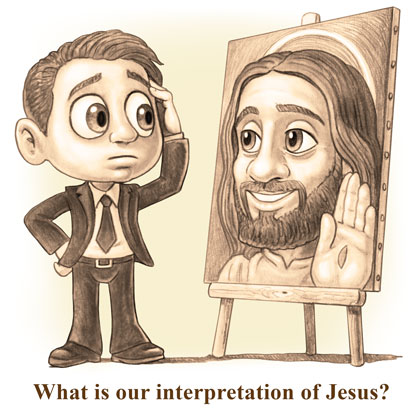 Ask the average person who Jesus was and you’ll get mixed answers. Some say He was a wise teacher. Others think of Him as a social reformer who cared for the poor. A few compare Him to Gandhi or Buddha. Many see Him as a kind man who told people to love one another, did some so-called miracles, but ended up crucified. For most, that’s where the story ends. Ask the average person who Jesus was and you’ll get mixed answers. Some say He was a wise teacher. Others think of Him as a social reformer who cared for the poor. A few compare Him to Gandhi or Buddha. Many see Him as a kind man who told people to love one another, did some so-called miracles, but ended up crucified. For most, that’s where the story ends.
Christians, though, see Jesus very differently. He isn’t just part of history – He’s the centre of it. He is the promised Messiah, foretold long before His birth (Isaiah 9:6). He is both fully God and fully man (John 1:14). He is God’s gift of salvation to a broken world (Romans 6:23). He was crucified for our sins and rose again on the third day in victory over death (1 Corinthians 15:3–4). Today, His humanity sits at the Father’s right hand, interceding for us (Romans 8:34), while in His divinity He is present everywhere (Matthew 28:20). He has promised to return without warning, to reign on earth for a thousand years (Revelation 20:4). And when history reaches its end, He will be the Judge of every soul (Revelation 20:11–12).
Where the world sees only a moral example, Christians see Jesus as the Saviour who gave His life so all may have eternal life. Where the crowd says He died long ago, Christians believe He is alive forevermore. Where many dismiss Him as irrelevant, Christians proclaim that He holds the future of every soul in His hands.
If Jesus really is who He claimed to be – the Son of God, the Saviour of all – then He’s worth more than a polite nod. If you’ve only thought of Him as a contentious teacher from history, it’s time to look closer. The Bible declares that your eternal soul depends on it.
“Nor is there salvation in any other, for there is no other name under heaven given among men by which we must be saved.” Acts 4:12
Back to Top ------------------------------------------------------------------------------------------------ |
Reason 9: Our salvation is a free gift.
 A gift is something paid for by another person and given freely – no strings attached. We do not earn or deserve a gift; otherwise, it would no longer be a gift, but a payment, wage or reward. Yet even when a gift is offered, it only becomes ours when we freely accept it. A gift is something paid for by another person and given freely – no strings attached. We do not earn or deserve a gift; otherwise, it would no longer be a gift, but a payment, wage or reward. Yet even when a gift is offered, it only becomes ours when we freely accept it.
God has given humanity the greatest gift of all. He humbled Himself and came into the world as a man – Jesus Christ – and willingly went to the cross to pay the penalty for the sins of the world. He did this so that anyone who chooses to believe in Him may receive everlasting life in Heaven instead of judgement.
The Bible makes it clear that salvation is not something we can work for or earn. Ephesians 2:8–9 says, “…it is the gift of God, not of works, lest anyone should boast.” If salvation could be achieved through our own efforts, then Christ’s sacrifice would not have been necessary. The cross shows that our sin-debt was too great for us to pay ourselves, but not too great for God’s love and grace.
All that remains for us to receive everlasting life is to accept it by faith. Like any gift, it must simply be received. We do not contribute to it, pay for it, or deserve it. Jesus Christ paid for it completely.
John 3:16 declares, “For God so loved the world that He gave His uniquely born Son, that whoever believes in Him should not perish but have everlasting life.” When a person believes in Christ, everlasting life becomes their permanent possession. God does not take back His gifts. Since we did nothing to earn salvation, we can do nothing to maintain it or lose it. Eternal life rests on God’s promise and Christ’s finished work, not on human performance.
Imagine eternally regretting the refusal of God’s greatest gift. The good news is that receiving it is not complicated – it comes through simply believing in Christ and accepting by faith what He has already paid for. As it is freely given – it must be freely received.
Jesus said in John 6:40, “And this is the will of Him who sent Me, that everyone who sees the Son and believes in Him may have everlasting life; and I will raise him up at the last day.”
Back to Top ----------------------------------------------------------------------------------------------- |
Reason 10: To go to Heaven when we die.
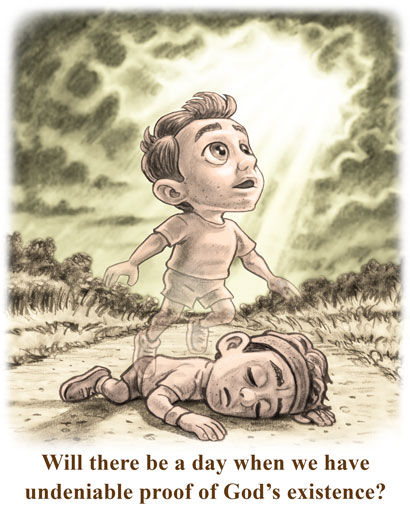 Even when the sun is hidden behind thick clouds or out of sight at night, we know it’s still there. In fact, our very survival depends on it – if the sun ceased to exist, so would we. Even when the sun is hidden behind thick clouds or out of sight at night, we know it’s still there. In fact, our very survival depends on it – if the sun ceased to exist, so would we.
Many ask: ‘If God is real, why doesn’t He just reveal Himself?’ But God is not hiding. Like the sun behind the clouds, He has always been present. We may not see Him face to face, but His fingerprints are everywhere: the beauty and complexity of creation, the fine-tuned laws of the universe, the moral compass within our hearts, and our deep longing for meaning – all point to Him. The Bible says in Romans 1:20: For since the creation of the world His invisible attributes are clearly seen, being understood by the things that are made.
Still, people demand that God should prove Himself in a way that satisfies human terms. But there are good reasons why God does not fully reveal Himself in this life:
• Sin has separated us. Since the fall in the Garden of Eden, humanity has been distanced from God’s full presence.
• His glory would overwhelm us. In our current, fallen state, we could not endure His full majesty (Exodus 33:20).
• Faith must be real. If God’s commanding presence was obvious, belief would be automatic and from fear, not chosen.
God gave us free-will. Love cannot exist without choice, and He will not force Himself upon us. God wants genuine relationship, not forced obedience. But since humanity’s fall, sin has separated us from Him. That’s why God Himself stepped into our world in the person of Jesus Christ (Phil. 2:5-8). He paid the full penalty for sin so the way back to Him could be freely offered to all. The choice is now ours. Will we accept His offer of forgiveness and eternal life through Jesus Christ?
Every day, an estimated 150,000 people die – that’s roughly 106 people every minute – each stepping into eternity and meeting their Creator. For those who refused to believe because God didn’t meet their terms, the clouds will one day part and the proof they demanded will be undeniable. By then, the only question that will matter is: ‘Did you accept or reject Jesus Christ?’ The consequences are eternal.
“And this is the testimony: that God has given us eternal life, and this life is in His Son.” 1 John 5:11
Back to Top ----------------------------------------------------------------------------------------------- |
In Conclusion:
The world’s greatest intellects can neither prove nor disprove the existence of God. In the end, it comes down to personal belief. If we are determined not to believe in something, we will naturally look for ways to explain away any evidence for it. We live in a world where “seeing is believing”; however, one of the greatest acts of trust we can show is believing in someone before all the evidence is seen.
 God does not force Himself upon us or override our free will. That is why belief is the response He asks for before He fully reveals Himself. Often, it is those who step out in faith who begin to see God working in their lives. This helps explain why many Christians have such strong faith — by believing, they have seen, and once something is experienced personally, it becomes much easier to believe. God does not force Himself upon us or override our free will. That is why belief is the response He asks for before He fully reveals Himself. Often, it is those who step out in faith who begin to see God working in their lives. This helps explain why many Christians have such strong faith — by believing, they have seen, and once something is experienced personally, it becomes much easier to believe.
In a world built on reason and proof, believing before seeing can seem foolish. Yet if we continually reject the possibility of God, we may unknowingly close the door on Him ever revealing Himself to us. Give God a chance. God does not need us — but we certainly need Him. He reveals Himself through creation and through His Word, the Bible, but if we want God to reveal Himself more personally in our lives, we must be willing to seek Him.
The good news is that God welcomes anyone who sincerely seeks Him. No matter where you are in life, faith can begin with a simple willingness to believe and take that first step towards Him.
The Bible states in John 10:9 that Jesus Christ is the door, and that by believing in Him we receive everlasting life and an eternal relationship with God.
But without faith it is impossible to please Him, for he who comes to God must believe that He is, and that He is a rewarder of those who diligently seek Him. Hebrews 11:6.
Back to Top ------------------------------------------------------------------------------------------------ |
------------------------------------------------------------------------------------------------------------- |
------------------------------------------------------------------------------------------------------------- |
------------------------------------------------------------------------------------------------------------- |
These Christian illustrations can be used in sermons, religious education or personal use without charge or obligation.
They may be freely downloaded, copied and distributed without permission as long as no cost is charged and source is recognized.
|
 |


